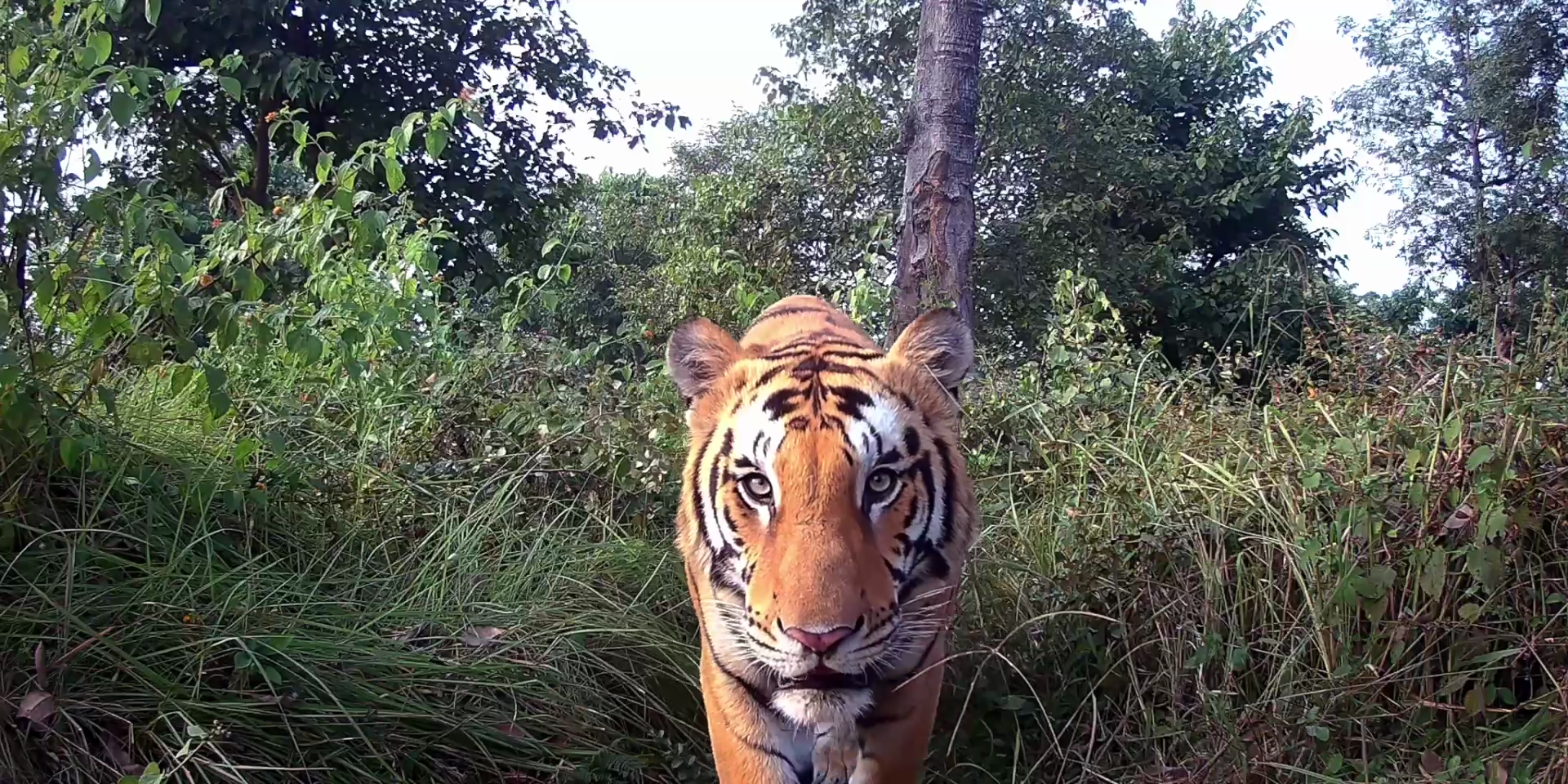
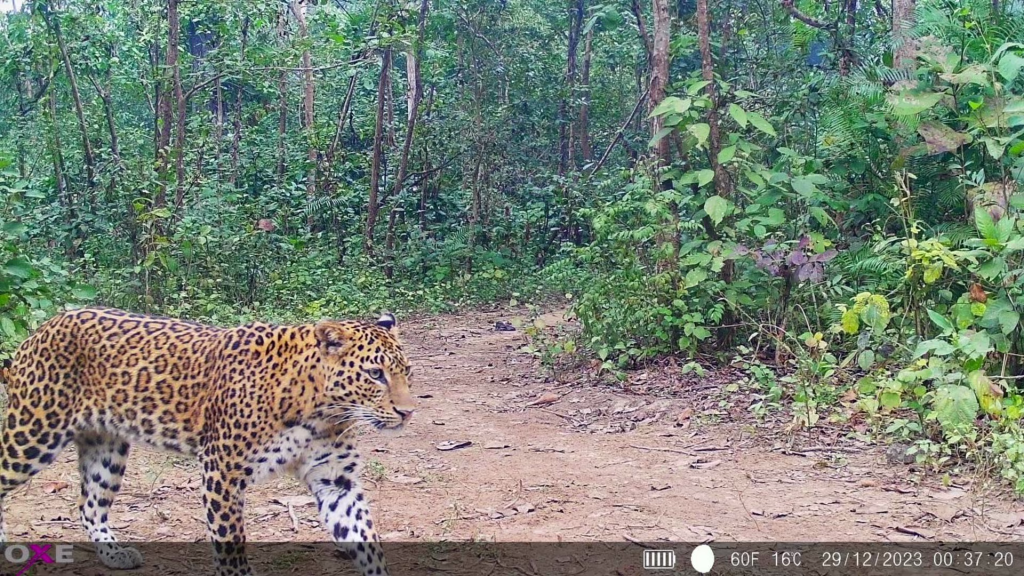
We had arrived in the wild west of Nepal. Here, dense forests and golden grasslands stretch for miles, carved by the winding path of its rivers. Within this majestic wilderness lie Bardiya and Banke National Parks. Home to Bengal tigers, one-horned rhinos, wild elephants, and the elusive leopard. Once ravaged by poaching, Bardiya has made an extraordinary comeback, more than tripling its tiger numbers, and is now considered one of the best places in Asia to see tigers in the wild. But beyond the safaris and guesthouses is a story you don’t hear about.
The sun is setting, the last of the day’s tasks are being finished, dinner is on the fire, and soon everyone is asleep for the night. It’s not long until they’re woken up by noises in the darkness. An elephant has entered one of the local villages bordering the park. He’s looking for food, and now everyone is awake. They’re shouting, fires are lit and a drone goes up which is used to imitate the sound of bees. This is a noise they worked out that elephants don’t like. The elephant is guided back into the forest, but the damage is done. Another family’s income is destroyed by the ruined rice crops.
One hundred and fifty thousand people live along the edges of the park, in what’s known as the buffer zone — a mosaic of villages and community forests. There are no fences. Wildlife moves freely between the park and the same forests that people depend on for fodder, timber, wood for fuel, medicine, and water. Every day, villagers walk the same paths as tigers, elephants, and rhinos.
When these worlds collide, lives are at stake. Many lives have already been lost. As the wildlife numbers have exploded, with no additional space and resources, so has human-wildlife conflict. Tigers and leopards are being forced out of their territories as a competition for resources and space plays out. When the weaker animals are forced out they enter nearby villages to prey on livestock and people. Elephants raid grain stores, crush crops, and even tear through homes, leaving families both shaken, devastated, and financially shattered.
These communities have become the protectors of wildlife— keeping poachers out, restoring forests, and trying to maintain a fragile balance. And now, the same people who helped save these animals are the ones bearing the cost of their return. And yet, despite the constant fear, something unexpected is happening in Bardiya. In most parts of the world, human–wildlife conflict leads to anger, retaliation, and calls to remove or kill the animals responsible. But here, something different and remarkable is unfolding: Communities are not retaliating. Despite personal loss and an ongoing pattern of fatal attacks, they still want wildlife to remain wild and protected. They still want to find a way to coexist with the species living around them, choosing solutions over revenge or fear.
Nepal’s story isn’t a fairy tale. It’s complex, layered and real, and out of this tension, hope shines. It’s the young men and women from these villages who’ve become the unsung heroes of Bardiya. The Community-Based Anti-Poaching Unit, or CBAPU, began in 2009 as a grassroots effort to protect their forests from poaching – and it was a massive success! Poaching in Bardiya fell to almost zero. But as human-wildlife conflict increased, the CBAPU evolved into something more—protectors not just of the wildlife, but of the people living beside it.
Many members of the CBAPU are victims of this conflict; they could have turned away, but instead they chose to stay and help. It’s their story that brought us back to Bardiya. Their aim is to go from human-wildlife conflict to coexistence. They have many initiatives in progress, a few examples are a community nursery with plants people would normally get from the forest, reducing the need to enter it. As you can see it’s very popular! They are also growing tumeric a crop elephants naturally avoid, and it’s very profitable. These are just a few examples.
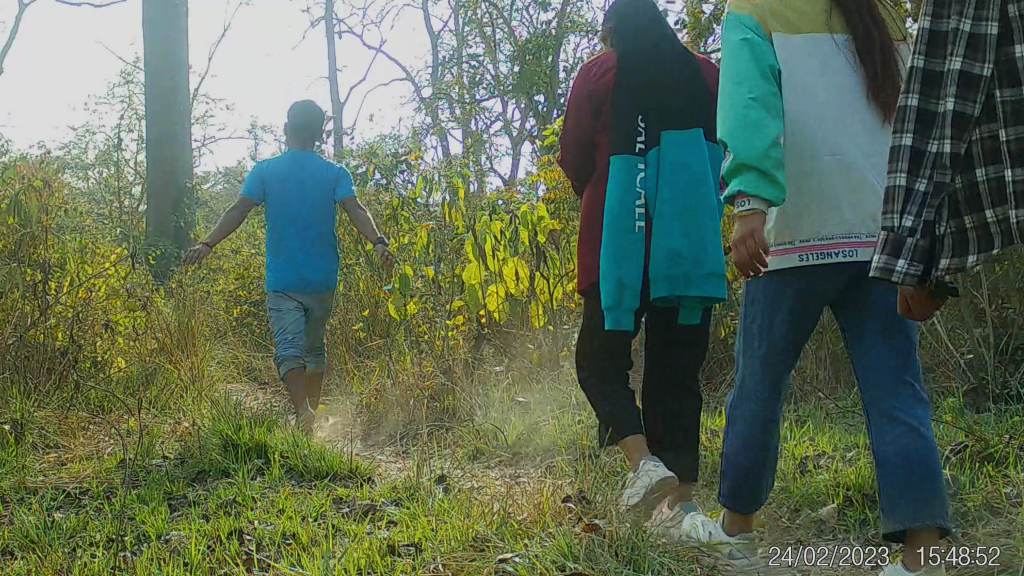
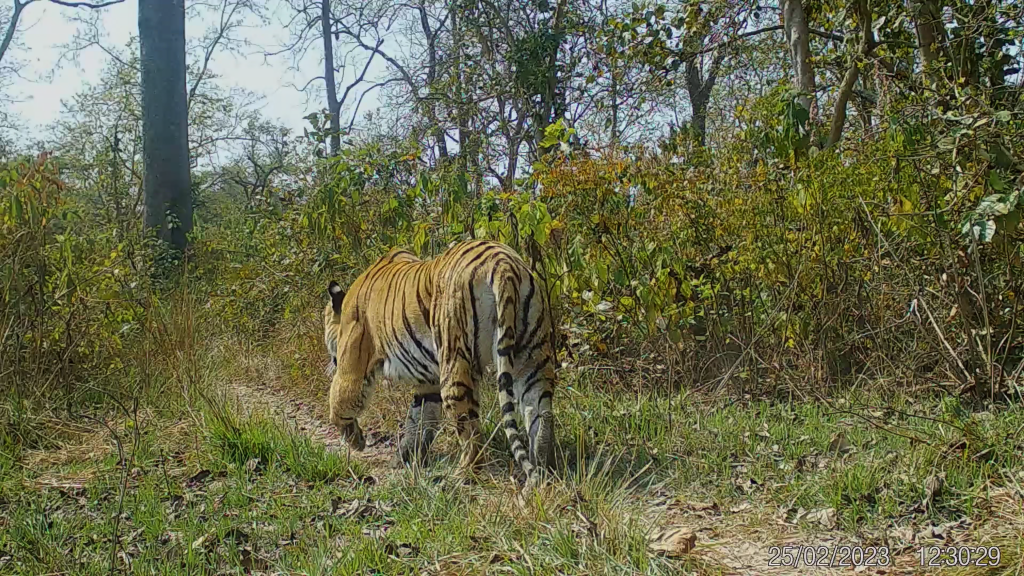
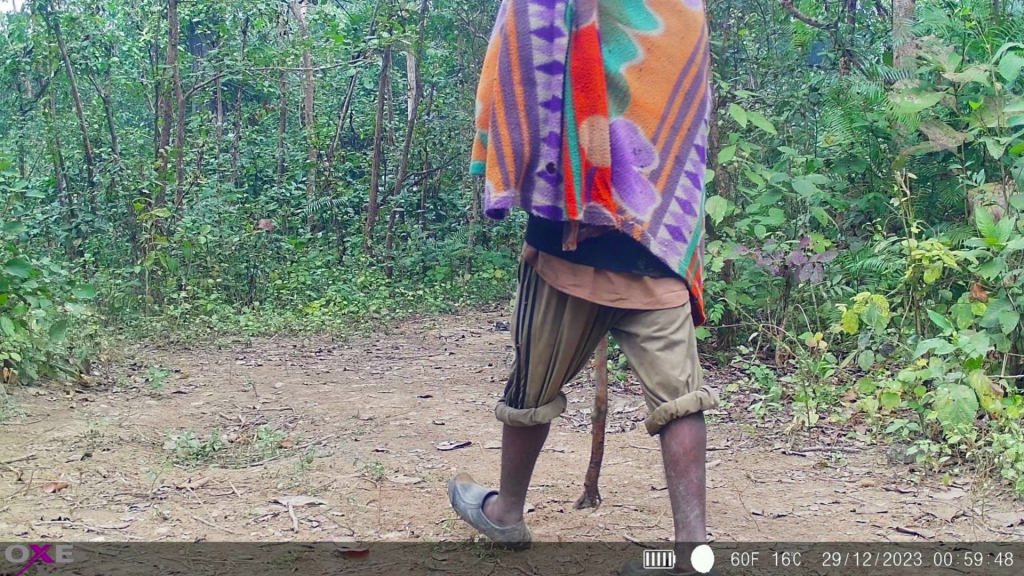
We joined them to check the camera traps in the community forest— gathering footage they use for monitoring wildlife and informing locals. Camera traps are essential for alerting and educating the community. They allow everyone to learn about the behaviour of the animals which is extremely helpful in lowering the conflict. Knowing the behavior of the wildlife helps people make better decisions. Simple practices like traveling in groups, and avoiding dawn and dusk can save lives. In some of the camera trap footage you can see villagers walking along the same paths as these apex predators, sometimes only minutes apart. It’s a stark reminder of just how vulnerable they are every time they enter the forests. These images and videos open up an opportunity for dialogue with the community about how to enter and exit the jungle safely.
What we found most inspiring is that these youth are volunteers. With limited resources and almost no financial support from the government or NGOs, they do the best they can with what they have. The camera traps they rely on get damaged. SD cards fill up. Their computers are outdated. They patrol in scorching heat and trek long distances through dense forest with little to no equipment. Every time they go out on patrol, they’re putting their lives on the line. And still — they go.
We were headed to stay in the community tree-house they built for tourists to stay in. It is just one way they are working towards being self-sufficient.
The CBAPU members are always on call day and night. If a tiger strays too close to a village, they get the call. If an elephant enters a field, they’re the ones who rush out in the dark. When someone dies from an attack, they are there to console the family. They are the glue holding this entire system together. Around the world, the places richest in wildlife are often home to communities facing the greatest challenges. The future depends on solutions that protect both people and animals—where everyone rises together. And Bardiya might just be showing the world what that future looks like.
It truly is incredible the impact these young volunteers are having in Bardiya. But they can only do so much with what they have. Now they just need support to take it to the next level. If you’d like to help these young volunteers get to a point where they’re self-sustaining please click here Every contribution goes directly to the CBAPU allowing them to continue their extraordinary work. Thank you so much in advance.
If you’re visiting Bardiya, Nepal and would like to connect directly with the CBAPU, please click here. They can help arrange ecotourism experiences such as visits to the community forest, treehouse stays, safaris, camera trap data collection, accommodation including homestays, and more.